

Vocal Prayer
What Is Vocal Prayer in the Catholic Church?
Vocal prayer is prayer expressed outwardly in words, spoken or sung, either alone or with others. It is the most basic and universal form of prayer, because it engages the human voice, the body, and the mind, uniting exterior expression with interior intention.
The Church teaches that vocal prayer is not “lower” or immature prayer. Rather, it is foundational, because the human person is both body and soul, and God desires the prayer of the whole person.
The Catechism of the Catholic Church teaches:
“Vocal prayer is an essential element of the Christian life. To his disciples, drawn by their Master’s silent prayer, Jesus teaches a vocal prayer, the Our Father.” (CCC 2701)
Vocal prayer:
-
Gives language to the heart
-
Forms and trains our interior life
-
Unites us with the prayer of the Church across time
-
Allows prayer even when feelings or silence are difficult
Jesus Himself prayed vocally—reciting psalms, blessing the Father aloud, and crying out on the Cross—confirming vocal prayer as authentically spiritual.
Characteristics of Authentic Vocal Prayer
Vocal prayer in the Catholic tradition is meant to be:
-
Intentional – words spoken with awareness, not mechanically
-
Interiorly engaged – the heart listens while the mouth speaks
-
Rooted in faith – trusting God hears and responds
-
Humble and relational – addressed to God, not performed
The Catechism cautions that vocal prayer becomes empty only when the heart is disengaged, not because it uses set words.
The Deeper Purpose of Vocal Prayer
At its best, vocal prayer:
-
Shapes the soul
-
Trains attention
-
Keeps the heart turned toward God
-
Bridges exterior life and interior communion
The saints consistently teach that faithful vocal prayer, prayed with love, gradually leads the soul toward interior prayer and contemplation—not by force, but by grace.
Examples of Vocal Prayer
Click each picture below for a description
 THE OUR FATHEROUR FATHER (LORD'S PRAYER) The model of all Christian prayer, taught directly by Christ. - Praises the Father - Surrenders to His will - Asks for daily provision - Seeks forgiveness and deliverance It is both communal and deeply personal, prayed daily in the liturgy and privately by the faithful. |  HAIL MARY FULL OF GRACEA prayer of Scripture and contemplation. The most common of the church's rosaries. - Draws from the Gospel of Luke - Honors Mary’s role while directing the soul toward Christ - Combines praise with humble petition It is vocal prayer that naturally leads many into meditative prayer. |  ROSARIES, CHAPLETS, NOVENASRosaries, chaplets, and novenas are structured forms of Catholic prayer that help steady the heart and focus the soul on God’s living presence. The Rosary meditates on the life of Christ through a gentle rhythm of repeated prayers; a chaplet centers on a particular mystery/devotion, such as Divine Mercy (Click link below) and a novena is nine days of faithful prayer for a specific intention. Each practice combines spoken prayer with interior trust, inviting us into steady relationship. |
|---|---|---|
 PSALMSTHE PSALMS The Church’s original prayer book. - Prayed by Christ - Prayed daily in the Liturgy of the Hours - Express every human emotion: joy, sorrow, anger, trust, longing When prayed aloud, the psalms allow the individual to enter Christ’s own prayer to the Father. |  LITURGICAL RESPONSESLiturgical responses are the spoken prayers and acclamations offered by the congregation during the Mass. Phrases such as “And with your spirit,” “Amen,” “Lord, have mercy,” and “Thanks be to God” allow the faithful to participate actively in the Church’s worship. These responses are not mere replies, but expressions of unity with the priest and with the whole Body of Christ. Through them, the assembly joins its voice to the prayer of the Church, entering more fully into the sacred mystery. |  LITANIESA litany is a form of vocal prayer made up of a series of short invocations followed by a repeated response. In a Litany of the Saints, we call upon holy men and women by name, asking for their prayer and companionship on our journey toward God. The rhythm of invocation and response creates a humble, communal prayer — one voice calling, many voices answering. A litany reminds us that we do not walk alone; we belong to a great cloud of witnesses, united in Christ, who intercede for us. |
 SPONTANEOUS SPOKEN PRAYERDescribe your image |  SHORT ASPIRATIONS/BREATH PRAYERVery simple vocal prayers repeated gently: “Jesus, I trust in You.” “Come, Holy Spirit.” “My Lord and my God.” These prayers often move seamlessly between vocal and interior prayer, especially in daily life. |
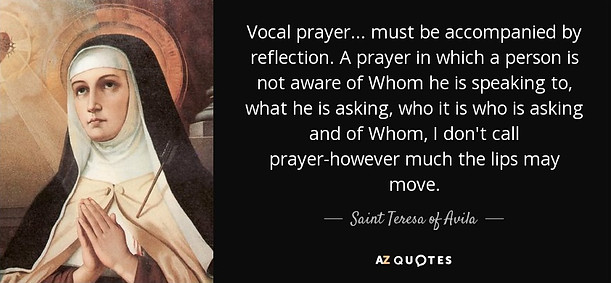
In order that our vocal prayer be real prayer, we must first recollect ourselves in the presence of God, approach Him, and make contact with Him. Only when we have such dispositions will the words we pronounce with our lips express our interior devotion and be able to sustain and nourish it. Unfortunately, inclined as we are to grasp the material part of things instead of the spiritual, it is only too easy in our vocal prayer to content ourselves with a mechanical recitation, without taking care to direct our heart to God; hence we should always be vigilant and alert. Vocal prayer made only by the lips dissipates and wearies the soul instead of recollecting it in God; it cannot be said that this is a means of uniting us more
(Dan Burke, Vocal Prayer, https://spiritualdirection.com/2017/04/24/vocal-prayer)
Click each picture below to access a "how to" guide for each vocal prayer

The Rosary

St. Joseph Chaplet
Scriptural Rosary

Holy Spirit Chaplet

Seven Sorrows Rosary

St. Michael Chaplet

Divine Mercy Chaplet

Sacred Heart of Jesus Novena
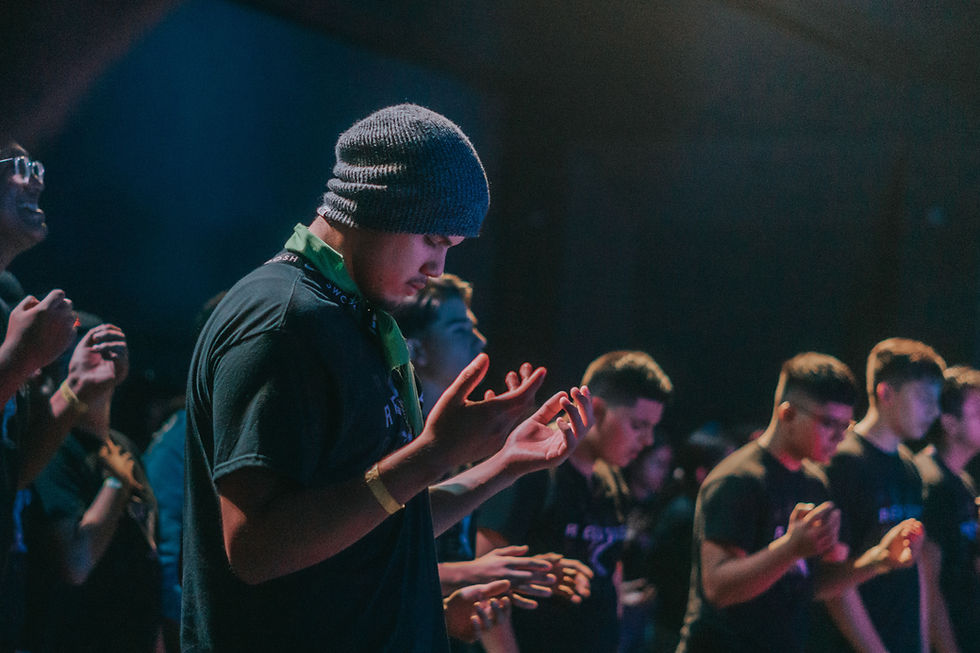
For where two or three are gathered in my name, there am I in the midst of them.
Matthew 18:20